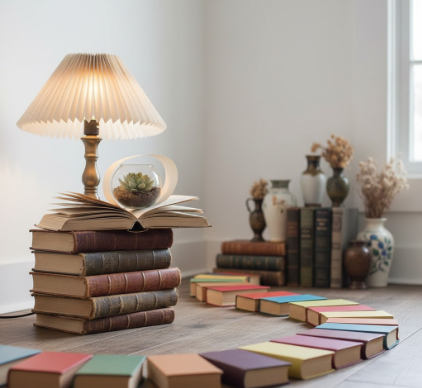
For any true book lover, the collection often outgrows the shelf space. Books start to pile up on nightstands, get tucked away in closets, or form precarious towers in forgotten corners. But what if we started to see these beloved objects not as clutter to be contained, but as powerful decorative tools in their own right? Books possess a unique magic; they hold stories, but they also have physical beauty in their colors, textures, and typography. It’s time to liberate your library from the confines of the traditional bookshelf and let your books become an integral part of your home’s aesthetic.
Thinking beyond the shelf is about treating books as you would any other design element, like a vase, a sculpture, or a piece of art. They can add height, introduce a pop of color, create texture, and tell a story about who you are before a single page is even opened. This approach transforms your collection from a mere storage problem into a dynamic and personal design opportunity.
The Art of the Stack: Creating Visual Interest
The simplest way to start decorating with books is by mastering the art of the stack. This isn’t about creating a messy pile; it’s about curating a deliberate, sculptural arrangement that draws the eye and adds character to a surface. A well-composed stack can anchor a coffee table, give life to an empty mantelpiece, or add height and dimension to a side table.
The Coffee Table Centerpiece
Your coffee table is prime real estate for making a design statement. Instead of a single, generic object, create a stack of three to five large, visually appealing books. These are often called “coffee table books” for a reason—their oversized format and stunning photography are meant to be displayed. Arrange them with the largest book on the bottom, creating a stable and visually pleasing pyramid. Don’t be afraid to leave them slightly askew for a more casual, lived-in feel. To complete the vignette, place a small decorative object on top—a scented candle in a beautiful jar, a small potted succulent, a string of beads, or a unique paperweight.
A pro tip: Think in terms of a color story. You could stack books with complementary spine colors, like various shades of blue and green, to tie into your room’s color palette. Alternatively, a stack of books with stark, monochromatic black and white spines can create a sophisticated, modern look.
End Tables and Console Accents
Smaller stacks can work wonders on end tables, console tables, and even dressers. Use a short stack of two or three books to elevate a table lamp, giving it more presence and height in the room. This is a classic interior designer trick that adds a layer of sophistication. You can also create a small standalone stack next to an armchair, topped with a pair of reading glasses, to create a cozy and inviting reading nook. On a long console table, several small, curated stacks of varying heights can create a beautiful rhythm and prevent the surface from looking flat and uninteresting.
Remember the rule of odds for a visually appealing composition. Stacks of three or five books tend to look more natural and aesthetically pleasing than even-numbered stacks. When arranging your books, also consider their condition. While a worn, vintage book can add immense character, you might want to protect fragile first editions from direct sunlight or the risk of a spilled drink.
Color, Cover, and Composition
Once you’ve embraced the stack, you can begin to play with more advanced concepts, treating the books themselves as artistic media. Their colors and covers are your palette, and your home is the canvas.
Displaying Books as Art
Some books have covers that are simply too beautiful to hide. Think of them as mini-masterpieces and display them accordingly. A narrow picture ledge, traditionally used for framed photos, is the perfect place to line up a few books with their covers facing forward. This allows you to create a rotating gallery of your favorite cover art. You can create a theme—all nature-themed covers, for instance—or just choose a selection that brings you joy.
A single, stunning book can also be placed on a small decorative easel on a bookshelf or side table. This immediately elevates the book to a piece of art and creates a focal point. It’s a wonderful way to honor a particularly meaningful or visually striking volume in your collection.
The Power of Color Blocking
While organizing books by color on a shelf can be a controversial topic among literary purists, using color-blocked stacks as decor is a purely aesthetic choice that can have a huge impact. Imagine a small stool in a neutral room with a vibrant stack of all-yellow books. It instantly becomes a point of interest. A stack of books with calming, neutral-toned spines (creams, grays, and whites) can add texture and warmth to a minimalist space without disrupting the serene atmosphere. This technique allows you to use your book collection to inject color into your decor in a subtle, sophisticated way.
Unconventional Spaces for Literary Style
Who says books only belong in the living room or office? Bringing books into unexpected places can add a layer of warmth, personality, and charm throughout your home.
The Intellectual Hearth
If you have a non-working fireplace, don’t let it sit as an empty, dark void. Filling the hearth with books is a fantastic way to turn it into a stunning and unique feature. You can stack them neatly with spines facing out for a more traditional, library-like feel. For a more rustic or eclectic look, you can stack them with the pages facing out, which creates a wonderful, unified texture of aged paper. This adds an incredible amount of warmth and character, making the fireplace a focal point even without a fire.
Books in the Kitchen
The kitchen is the heart of the home, and a few well-placed books can make it feel even more welcoming. A stack of your most-used (and most beautiful) cookbooks on the countertop not only keeps them handy but also adds a touch of homeliness. You can also place a few on an open shelf alongside your ceramic dishes or glassware. It signals that the kitchen is a space for creativity and passion, not just utility.
Ultimately, decorating with books is about celebrating them in all their forms. It’s about recognizing their physical beauty and the personal stories they represent. So, take a look at your collection with fresh eyes. See the potential in that stack by your bed or that box in the attic. Your books are waiting to become a part of your home’s story in a whole new way.