
Content
The Essential Foundation: Function First
Before you even think about adding a pretty vase or a scented candle, you must address the practicalities. A beautiful nightstand that doesn’t hold what you need is just another piece of frustrating furniture. Start by decluttering completely. Empty the drawers, clear the surface, and be ruthless. Once you have a blank slate, take inventory of what you absolutely need to have beside your bed.The Unavoidable Essentials
Most people require a core set of items. Your list might look something like this:- Lighting: A good lamp is non-negotiable. Whether you’re a late-night reader or just need to navigate your room in the dark, accessible light is key.
- An Alarm: This could be your phone or a traditional alarm clock. If it’s your phone, you’ll need a designated charging spot.
- A Place for a Drink: A coaster is a must-have to protect your furniture’s surface from water rings.
- Nightly Necessities: This could include hand cream, lip balm, medication, or eyeglasses.
When selecting a nightstand, pay close attention to its height. Ideally, the top surface should be level with or just slightly higher than the top of your mattress. This makes it ergonomically comfortable to reach for items from a reclined position. A nightstand that is too low or too high can be awkward and disruptive to use.
Building the Look: The Art of Layering
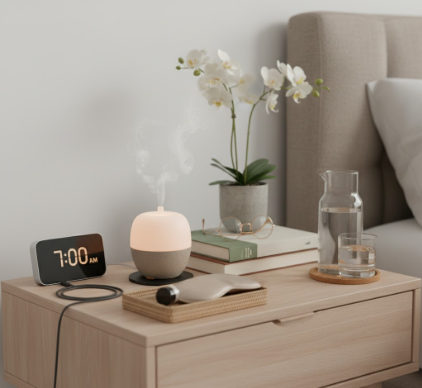
With the functional base established, it’s time for the fun part: styling. The secret to a well-styled surface is creating visual interest through layers, using a mix of heights, textures, and shapes. This prevents the arrangement from looking flat or one-dimensional.Step 1: Anchor with Height
Every composition needs an anchor, and on a nightstand, this is typically the lamp. It provides the primary vertical element. Don’t be afraid to choose a lamp with some presence. A lamp that is too small can look lost and insignificant. Consider its scale in relation to your bed and headboard. Wall-mounted sconces or a low-hanging pendant light are also fantastic options that free up valuable surface space entirely, creating an open, airy feel.Step 2: Add Life and Texture
Something living (or something that looks alive) instantly softens a space and adds a touch of nature. A small plant is a perfect choice. Opt for something low-maintenance like a succulent, a snake plant, or even a simple sprig of eucalyptus in a bud vase. If you lack a green thumb, a high-quality faux plant can achieve a similar effect without any upkeep. Besides plants, you can introduce texture with a marble coaster, a woven tray, or a ceramic dish.Step 3: Introduce Personal Objects
This is where your nightstand becomes uniquely yours. Incorporate objects that bring you joy or a sense of peace. This might be a framed photo of a loved one, a special souvenir from a trip, or a beautiful candle in your favorite scent. A small stack of two or three books—perhaps your current read and a couple of beautiful hardcover editions—adds both a horizontal element and a personal touch. Use a small tray or a decorative bowl to corral smaller items like your lip balm, rings, or a watch. This simple trick makes a collection of small objects look intentional and organized rather than cluttered.Putting It All Together: A Formula for Success
If you’re feeling overwhelmed, try following the “Rule of Three.” Grouping items in odd numbers is a classic design trick that is inherently more appealing to the human eye. Your trio could be:- Something Tall: Your lamp or a taller vase.
- Something Living: A small plant or fresh flowers.
- Something Personal: A stack of books, a framed photo, or a scented candle.


